Our curriculum is influenced by a few educational philosophies and, primarily, on the work of a nineteenth-century teacher named Charlotte Mason. Shortly, CM focuses on teaching children the skills associated with learning rather than the content itself, skills like studying, conducting research, asking questions, identifying new information, and overcoming challenges. Once learning these skills, even young children are able to teach themselves nearly any content simply by being exposed to it, rather than having to be fed carefully packaged lessons year after year.
Secondly, the most important information your child will learn is not exiled to one Bible class. God’s glory is illuminated as an aspect of history, literature, science, art, and even math when it is relevant. This ensures that children grow up to engage the world with intention, and that they recognize the true, the good, and the beautiful wherever they are.
Classical Literature
For example, Charlotte’s students used living books rather than dry textbooks. Living books are usually written in narrative or story form by one author who has a passion for his topic. A living book makes the subject “come alive.”
And the students were required to tell back, or narrate, in their own words what was read in the living book, in order to secure it in their minds. No fill-in-the-blank or multiple-choice for them; they practiced using rich language as they pointed out the ideas they gleaned from the reading and any mental connections they made between it and other ideas already residing in their growing minds and hearts.
Art & Music Study
Charlotte Mason believed in exposing a child to greatness in many forms, which is why she introduced music and art appreciation at her schools.
In Charlotte’s schools, one composer or artist was studied each month–both through experiencing the music and art, reading living books about the artist, and perhaps reproducing the style through art or music lessons.
Nature Study
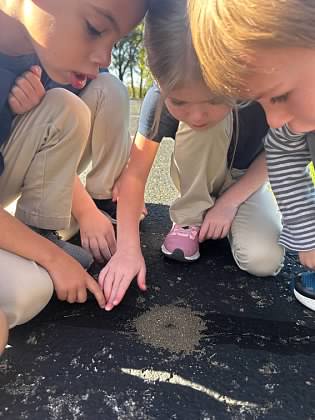
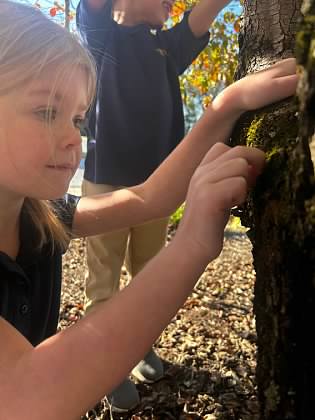
Charlotte thought children should spend as much time as possible outdoors, especially as young students.
Students kept their own detailed nature journals and also used nature guides to discover and identify the natural world in their neighborhood. Students at Way of Wisdom will participate in a weekly Nature Study.
Character Virtues
Way of Wisdom seeks to educate the whole child. Each month we highlight a character virtue to be taught and practiced with students. At the end of the each month, we invite families in the school for an award ceremony where we recognize the students that exemplified that months character virtue. Here are the character virtues that WoW highlights throughout the year.
Diligence, Patience, Forgiveness, Courage, Respect, Responsibility, Honesty, Kindness
 Way of Wisdom